
This post was originally published on A Globe Well Travelled in 2016. The content has been revised and updated with fresh information.
I still remember staring out the plane window as we flew into Iceland at nearly 11PM — and the sun was still hanging in the sky.
For years, Iceland had been one of those places I couldn’t stop thinking about. I’d seen the photos, read the itineraries, and mentally bookmarked waterfalls, black sand beaches and steaming geothermal pools long before I ever had a trip booked. But as I was living in Australia (on quite literally the opposite side of the world), Iceland always felt slightly out of reach.
That changed when my husband and I moved to New York City. Suddenly, Iceland wasn’t a far-flung dream destination — it was a five-hour flight away and the perfect stopover on our way to Europe. I didn’t hesitate to carve out five days to finally see this Nordic country for myself.
Now that I’ve actually been, I can confidently say this: Iceland lives up to the hype. But if you’re planning your first trip, it can be hard to know where to start. In this guide, I’m sharing the Iceland experiences that stood out the most to me — the ones I genuinely think are worth prioritising.
Quick summary:
Planning a trip to Iceland? This guide covers 10 must-do experiences, from waterfalls and black sand beaches to geothermal baths and wildlife encounters. Based on my own trip, these are the highlights I’d recommend for first-time visitors.
Recommended tours & tickets:
🤿 Silfra Snorkelling Tour – Snorkel between tectonic plates with gear and photos included.
🐧 Puffin Watching Cruise – Boat tour from Reykjavík harbour to nearby puffin colonies.
🐎 Icelandic Horse Riding Tour – Ride gentle Icelandic horses through scenic countryside.
💦 Blue Lagoon Entry Tickets – Relax in Iceland’s famous geothermal spa with milky-blue waters.
Things to do in Iceland: 10 must-have experiences

1. Get up close to Iceland’s waterfalls
One of the first things I noticed while driving through Iceland was just how many waterfalls there are. They’re everywhere — spilling over cliffs, tucked into valleys, and often appearing completely out of nowhere as you round a corner.
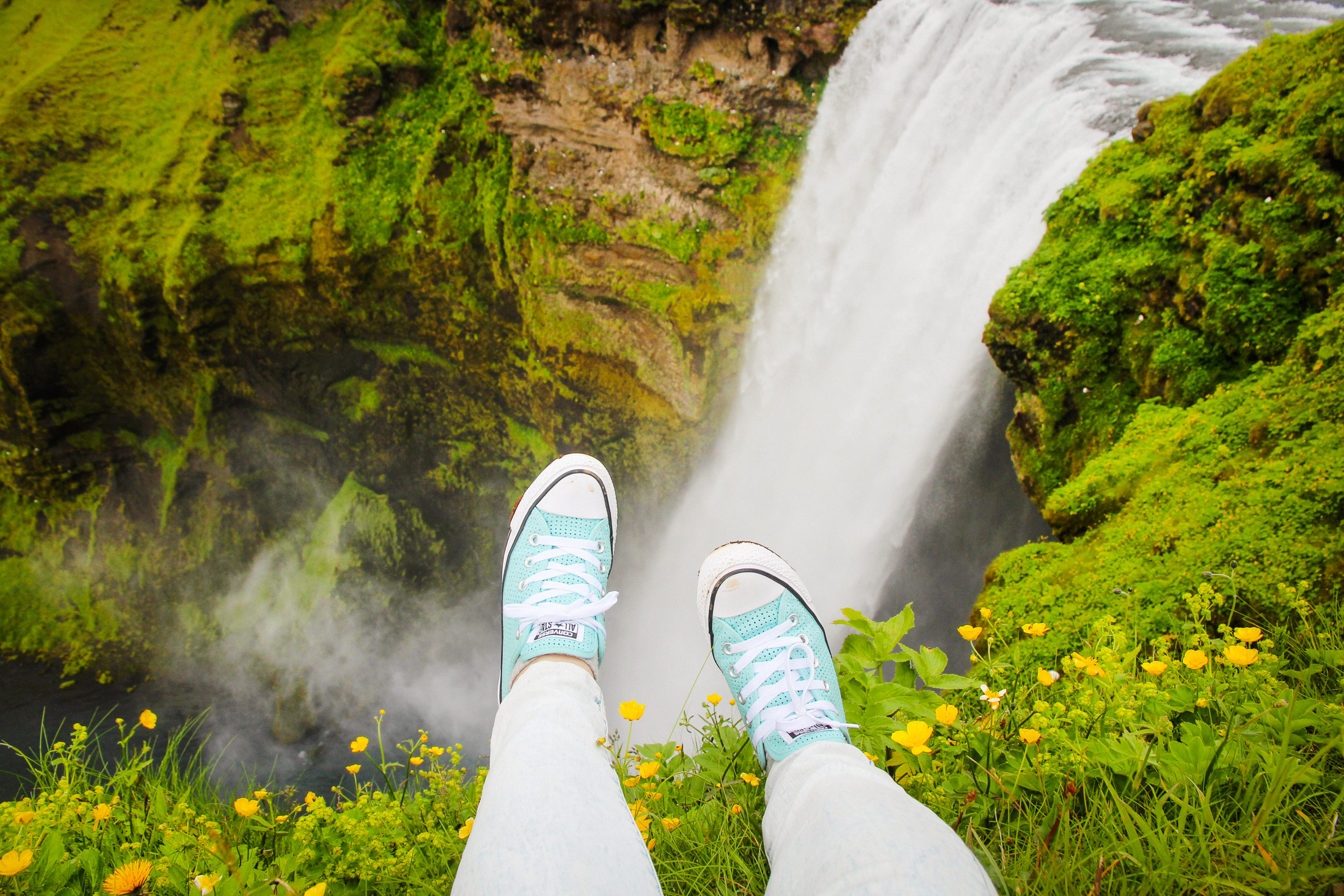
We visited three of the most famous waterfalls in the country: Seljalandsfoss and Skógafoss along Iceland’s south coast, and Gullfoss on the Golden Circle route. Each one felt completely different. Seljalandsfoss has a walking path that takes you behind the falls (yes, you will get soaked), while Skógafoss was probably my favourite — powerful, dramatic, and just as impressive from a distance as it is up close.
One thing to be prepared for is just how close you can get. Most of these waterfalls have minimal barriers, which means you’ll likely end up drenched from the spray and navigating muddy ground. It’s all part of the experience!
👉 Read more: Iceland South Coast itinerary: Visit waterfalls + black sand beach

2. See Iceland’s geothermal activity up close
You’ll probably spot Iceland’s geothermal activity before your flight even lands at the airport. As the plane descends into Keflavík, you can see steam rising from the ground in the distance — a pretty surreal first impression.
Once you’re on the ground, that geothermal presence is everywhere. The smell of sulphur is hard to ignore at first (especially when you turn on the hot water), but it quickly becomes part of the experience.
The most accessible place to see geothermal activity is along the Golden Circle. This is where you’ll find the famous Geysir area, where hot water erupts from the ground at regular intervals. While the original Geysir is now mostly dormant, the nearby Strokkur geyser erupts every few minutes — which is exactly what I saw when I visited. Unfortunately, my camera battery died right as I arrived, so I didn’t manage to capture it, but it’s definitely one of those moments that sticks with you.
If you’re particularly interested in how it all works, there’s also the Geothermal Energy Exhibition, which explains how Iceland harnesses this natural resource.
👉 Read more: Iceland Golden Circle: One day road trip itinerary

3. Take a dip in Iceland’s thermal baths
With geothermal energy powering much of the country, it’s no surprise that Iceland is full of hot springs, swimming pools and thermal spas.
We visited the Laugarvatn Fontana geothermal spa which sits along the Golden Circle, and it ended up being one of the most relaxing parts of the trip. Switching between the hot sauna and sitting in the warm pools while looking out over the cold, rugged landscape was definitely a memorable experience from my Iceland trip.
💦 The Blue Lagoon is probably the most famous geothermal spa in Iceland. Despite being rather pricey, it’s one of those iconic Iceland experiences that many travellers choose to prioritise.
I seriously considered going to Blue Lagoon, but at the time the entry fee felt a bit steep for our budget. If you’re looking for alternatives, there are plenty of other options across the country — including more low-key local pools and natural hot springs like Secret Lagoon on the Golden Circle.
Do your research for the best hot springs in Iceland and pick one or two to visit. No matter which ones you choose, it’s worth setting aside time for a geothermal bathing experience.

4. Say hello to an Icelandic horse
Seeing an Icelandic horse was high on my personal must-see list before the trip! As we drove through the countryside, we passed plenty of them grazing in distant fields, often with mountains in the background. Unfortunately, most of them were just far enough away from the road that we couldn’t get up close.
That changed on our final day, when we stopped at Gullfoss and found a group of horses standing right along the fence near the car park. I managed to coax one over just long enough to snap what I still consider one of my favourite travel photos — a slightly chaotic but very memorable selfie.
🐎 If you’d like a more guaranteed experience, there are horse riding tours from Reykjavík that let you interact with them up close while exploring the surrounding landscapes.

5. Spot puffins near Reykjavík
I assumed that seeing puffins in Iceland would require travelling far from Reykjavík — but it turns out you don’t have to go very far at all.
🐧 Just off the coast of the city are a couple of small islands that are home to puffin colonies during the warmer months. The easiest way to see them is by taking a boat tour from Reykjavík harbour.
We joined a puffin watching cruise and headed out onto the water for a closer look. One thing that surprised me was just how small the birds are — and how difficult it can be to get close to them without disturbing the colony.
If you’re planning to do this, I’d definitely recommend bringing a zoom lens for your camera or a pair of binoculars. It makes a huge difference when you’re trying to spot them perched along the cliffs.
👉 Read more: Can you see puffins from Reykjavik? What to know before booking a tour

6. See the northern lights or midnight sun
Timing your trip to Iceland can completely change your experience — especially when it comes to daylight.
I travelled during summer, which unfortunately meant that I missed out on seeing the northern lights. To catch the aurora, you’ll likely need to visit between September and April when the nights are dark enough.
The trade-off, though, was experiencing the midnight sun. Around the summer solstice in late June, the sun barely sets at all. On the night we arrived, it was still light close to midnight, and the sun didn’t fully dip below the horizon until well after 11PM.
It’s a slightly disorienting experience at first, but it also means you have extended daylight hours to explore — which is incredibly useful if you’re trying to fit a lot into a short trip.

7. Stand between two tectonic plates
Thingvellir National Park, part of the Golden Circle route, is one of the most geologically unique places in Iceland. This is where the Eurasian and North American tectonic plates meet, and it’s one of the few places in the world where you can actually see this divide above ground.
The landscape here is unlike anything else — with deep fissures, rocky cliffs and a vast open valley stretching out around you. You can walk through the rift valley, stand between continents, and see firsthand how the earth is slowly pulling apart.
🤿 One of the most unique ways to experience this is by snorkelling in the Silfra Fissure — a narrow gap between the tectonic plates filled with incredibly clear glacial water. Visibility here is exceptional, with striking shades of blue that almost don’t look real.
I didn’t do this myself, but it’s one of the most popular experiences in Iceland. Guided tours provide all the necessary equipment, including thermal dry suits to keep you warm in the near-freezing water, and include photos taken during the experience.

8. Walk along a black sand beach
Reynisfjara, near the town of Vík on Iceland’s south coast, is one of the most distinctive beaches I’ve ever visited. The shoreline is covered in dark volcanic pebbles, giving the entire landscape a dramatic, almost otherworldly feel.
It’s not exactly the kind of beach where you’ll want to go for a swim — the water is freezing and the waves can be unpredictable — but it’s absolutely worth stopping to walk along the shore and take in the scenery. Combined with the towering basalt columns that line the coast, it’s easily one of the most dramatic spots in the country.

9. Drive some of Iceland’s Ring Road
The Ring Road (Route 1) circles the entire country and connects many of Iceland’s most famous sights. Driving along Iceland’s Ring Road felt like moving through a constantly changing landscape — blackened lava fields one minute, vast open plains the next, followed by distant glaciers and dramatic coastlines.
We didn’t complete the full Ring Road, but we did travel part of it along the south coast as far as the town of Vík. If you’re comfortable driving, exploring even a section of the Ring Road is incredibly rewarding. Along the stretch we covered, we passed places like the Seljalandsfoss and Skógafoss waterfalls, Reynisfjara black sand beach, and the Sólheimasandur plane wreck — all of which ended up being standout experiences.
👉 Read more: How to visit the Sólheimasandur plane wreck in Iceland
For travellers with more time, driving the full loop around Iceland over multiple days is a popular option, and it gives you the chance to see even more remote and varied landscapes beyond the south coast. Many travellers choose to rent a camper in Iceland to combine their transport and accommodation into one ultimate road trip around the Ring Road.

10. Explore the city of Reykjavík
Reykjavík is where most trips to Iceland begin and end — and while it’s easy to focus on the country’s natural landscapes, the city itself is worth spending some time in. Even if you’re only there briefly, it’s worth setting aside a bit of time to wander through the streets, explore the waterfront and get a feel for the city.
👉 Read more: Reykjavik travel guide: What to know before visiting Iceland’s capital
Reykjavík has a relaxed, small-town feel despite being the capital, with colourful buildings, a walkable centre and a harbour that serves as the starting point for many tours, including puffin watching tours and whale watching cruises. It’s also where many Iceland day tours depart from, which makes it a practical starting point if you’re not planning to drive in Iceland.


Leave a Reply