
This post was originally published on A Globe Well Travelled in 2016. The content has been revised and updated with fresh information.
It wasn’t long ago that many travellers would have struggled to point out Iceland on a map.
But in recent years, this small North Atlantic country filled with dramatic landscapes has become one of the world’s most talked-about travel destinations. Whenever I mention Iceland to my friends or family who are planning a trip to Europe, they often have it ranked highly on their travel wishlist.
When I was living in the US in 2016, I was curious to see what all the fuss was about. I planned a five-day Iceland itinerary with my husband, basing ourselves in Reykjavik with a few day trips out of the city. The country’s colourful capital seemed like the perfect starting point for exploring the nearby geothermal pools and unique natural experiences that make Iceland feel almost otherworldly.
If you’re planning your own visit to Iceland, this Reykjavik travel guide covers everything you need to know before arriving — from the best time to visit and how to get around, to the top things to do in and around the city.
Quick summary:
Reykjavik is the gateway to Iceland’s spectacular landscapes, from waterfalls and geysers to volcanic beaches and geothermal spas. This guide explains when to visit, how to get around the city and the best things to do while exploring Iceland’s colourful capital.
Recommended tours & tickets:
🐋 Whale Watching Cruise – Boat tour from Reykjavik harbour to spot whales, dolphins and seabirds.
🎟️ Blue Lagoon Admission – Relax in Iceland’s famous geothermal spa between Keflavik Airport and Reykjavik.
🚐 Golden Circle Day Tour – Visit Thingvellir National Park, Gullfoss waterfall and Strokkur geyser in one day.
🚍 South Coast Day Tour – See epic waterfalls, black sand beach and a glacier on this full day trip from Reykjavik.

How to get to Reykjavik (from North America or Europe)
Most international visitors arrive in Iceland via Keflavik International Airport, which is the country’s main airport. Although it’s often referred to as Reykjavik’s airport, Keflavik is actually located about 50 kilometres from the city centre.
There are a number of airlines that operate flights to Iceland from both Europe and North America. Icelandair is the country’s national airline and runs an extensive network of routes between the two regions, often with Reykjavik as a stopover destination. I flew with Icelandair from New York City and had a really good experience — the flight was comfortable and the service was great.
How to get from Keflavik Airport to Reykjavik
Once you arrive at Keflavik Airport, you’ll need to travel into Reykjavik city centre.
🚌 The most common option is the Flybus airport transfer, which runs between the airport and downtown Reykjavik.
The journey takes around 45 minutes and buses are timed to meet every arriving flight. This is the option we chose when we arrived in Iceland, and it was a very straightforward way to get into the city.
On the way back to the airport we actually missed the bus — which was completely not our fault as the bus company gave us incorrect instructions — and ended up having to take a taxi instead. The bus company paid for the taxi, which was fortunate because the cost of taxis is high in Iceland compared to other European countries.

Best time to visit Reykjavik
Iceland is known for its cool climate, and Reykjavik sits at around 64° north in latitude. To put that into perspective, the Arctic Circle begins at roughly 66° north.
Despite this northern location, Iceland isn’t quite as cold as many people expect. The country lies in the path of the North Atlantic Current, which brings relatively mild temperatures compared to other places at the same latitude. I found the weather to be fairly tolerable during our June trip.
Visiting Reykjavik in summer
The peak travel season in Reykjavik runs from mid-June through to late August. This is when the weather is generally at its best and temperatures usually range between around 8°C and 13°C.
Summer is also when Iceland experiences the famous midnight sun. Around the summer solstice in late June, the sun sets just after midnight and rises again around 3am, meaning there are only a few hours of twilight each night.
This is the busiest time to visit Reykjavik, so accommodation and tours tend to book out well in advance and prices can be higher. If you’re travelling in summer, here are my tips on what to pack.
Visiting Reykjavik in winter
If seeing the northern lights is on your Iceland bucket list, then the best time to visit Iceland is during the winter months between September and April. During winter, temperatures in Reykjavik typically range between about -3°C and 2°C.
Although the weather can be colder and snow is more common, this period is generally much quieter for tourism and you’ll often find lower prices on accommodation and tours.

How to get around Reykjavik
Reykjavik is a relatively small capital city, which makes it very easy to get around once you arrive. It’s best to stay somewhere close to the downtown area so you can easily walk to most attractions. Most of Reykjavik’s main sights are within walking distance of each other and it rarely takes more than 20 minutes to get between places in the city centre.
There is also a local bus system that operates around Reykjavik if you prefer not to walk, although I didn’t personally use the buses during my visit. You can find routes and timetables on the Reykjavik public transport website.
If you’re planning to explore beyond the city, hiring a car is by far the easiest way to get around Iceland. We rented a small car during our trip — a little Chevrolet Spark — which worked perfectly well for driving around the main roads near Reykjavik. If you plan on travelling in winter or venturing into Iceland’s highlands, however, you’ll likely need a four-wheel drive vehicle.
Best things to do in Reykjavik

Hallgrímskirkja Church
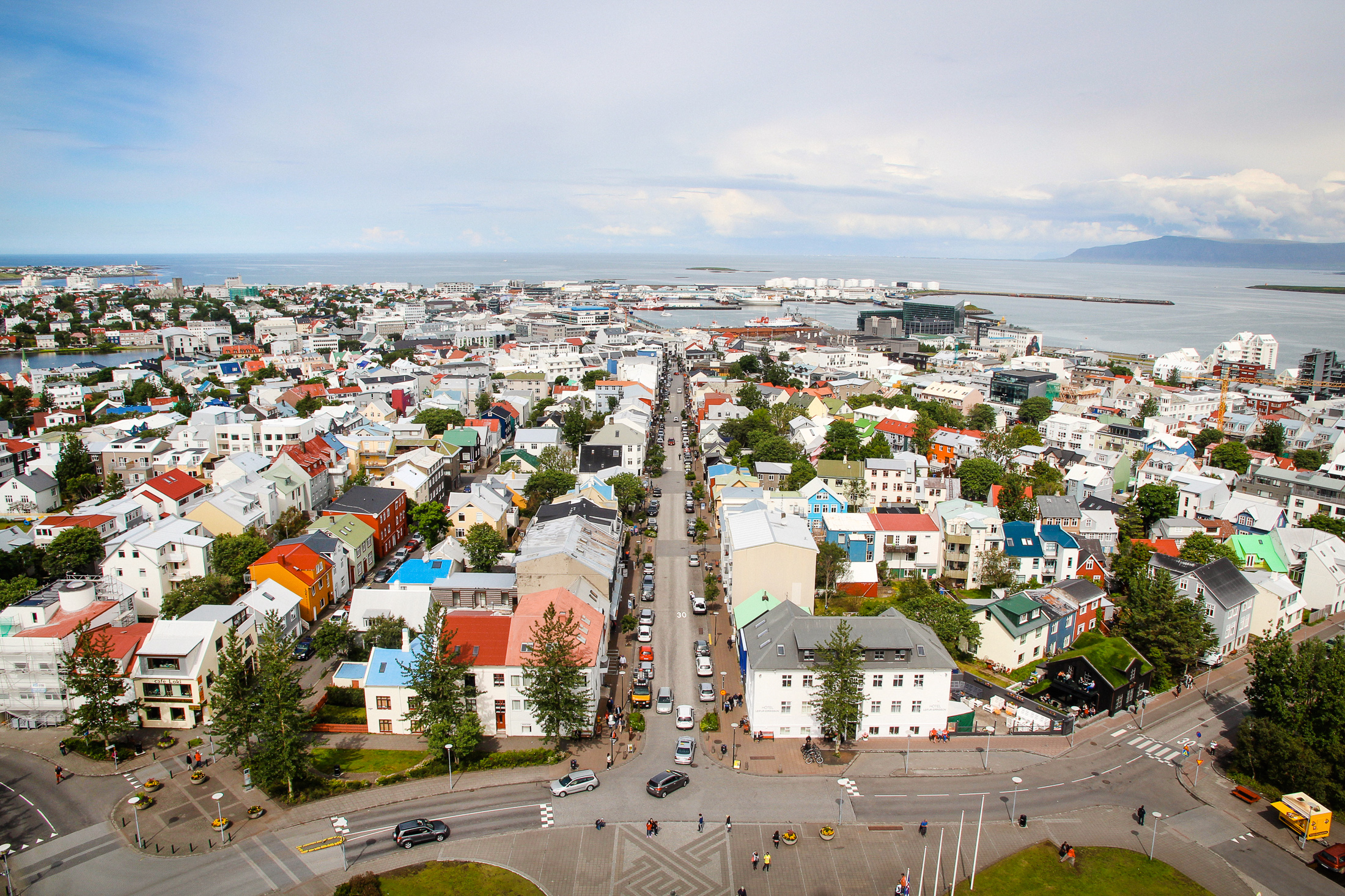
Hallgrímskirkja was easily my favourite of the Reykjavik attractions! It’s one of the city’s most recognisable landmarks. This striking concrete church towers above the surrounding streets and can be seen from almost anywhere in the city centre.
There is a small fee to take the elevator up to the top of the tower, but believe me — it’s well worth it. From the observation deck you’ll get fantastic views across Reykjavik’s colourful rooftops and the surrounding mountains.

Sun Voyager
The Sun Voyager is a striking steel sculpture shaped like a skeletal Viking ship that sits right on the waterfront. It’s one of Reykjavik’s most photographed landmarks.
Installed in 1990, the sculpture is intended as an ode to the sun and a symbol of discovery and exploration. It’s a beautiful spot for photos, particularly on a clear day when you can see the mountains across the bay (though I obviously wasn’t awarded this view on my visit!).

Harpa Concert Hall
I thought the Harpa Concert Hall was such an impressive building in Reykjavik. The exterior is made up of geometric glass panels that reflect the changing light throughout the day, creating a constantly shifting pattern across the building.
We stepped inside just to admire the architecture as visitors are free to walk around the public areas of the building, but you can also attend a concert or event in the space if you wish.

Tjörnin
Tjörnin is a peaceful pond located right in the centre of Reykjavik and a nice place to slow down for a while between sightseeing stops.
The pond is home to ducks and geese, and the surrounding paths and small bridges are a great spot to see some of Reykjavik’s charm. We didn’t spend long around here, but it was a cute destination for a short walk and some photos.

Laugavegur
Laugavegur is Reykjavik’s main shopping street and one of the liveliest parts of the city. The street is lined with boutique stores, restaurants and bars. The western end of Laugavegur has the highest concentration of shops, and the surrounding streets are filled with colourful buildings and small cafés.
I remember walking out of a small bar onto Laugavegur after a few late night drinks, and as we visited in June around the time of the midnight sun, the sky was confusingly bright even in the late evening. It felt as if we were stepping out into the afternoon, but all the shops were closed! So crazy!

Reykjavik Old Harbour
The Old Harbour area is definitely one of the most adorable parts of Reykjavik. The waterfront is lined with seafood restaurants, cafés and shops painted in bright colours. Many whale watching and puffin watching tours depart from around here.
It’s a great place to wander around, particularly on a clear day when you can look across the bay towards the mountains in the distance. As you can see, I was treated to some spring blooms when I visited in June which really added to the charm!

Whale watching or puffin watching cruise
One of the most popular activities in Reykjavik is heading out on a wildlife cruise from the city’s harbour. The waters around Iceland are home to an incredible variety of marine life, and boat tours give visitors the chance to see some of these animals in their natural habitat.
Depending on the time of year, it’s possible to spot species such as minke whales, humpback whales, harbour porpoises and white-beaked dolphins in the waters around Reykjavik. Whale watching tours operate throughout the year, although the peak season generally runs from April to October.
🐋 Spot wildlife while you enjoy the dramatic scenery along Iceland’s coastline on a Reykjavík Whale Watching and Marine Life Cruise, which departs from the city’s Old Harbour and heads out into Faxaflói Bay.
During my visit, we actually chose to do a Puffin Watching Boat Cruise. The tour took us out to small islands just off the coast where large colonies of puffins nest during the summer months. Seeing these little seabirds up close was a really fun experience and something I’d definitely recommend if you’re visiting during puffin season.

Reykjavik street art
One of the things that surprised me most about Reykjavik was just how colourful the city is. As you walk through the downtown streets you’ll notice huge murals and creative street art painted across buildings throughout the area.
Some of the best pieces can be found around Laugavegur and the surrounding streets, and just wandering through the neighbourhood is one of the easiest ways to discover them.
Best day trips from Reykjavik
One of the biggest advantages of staying in Reykjavik is how easy it is to explore the surrounding landscapes on day trips. Some of Iceland’s most famous natural attractions are located within a few hours drive of the city. Here are some of the the most popular Reykjavik day trips.
Blue Lagoon
🎟️ The Blue Lagoon is one of Iceland’s most famous attractions. The lagoon’s milky blue water is heated naturally by geothermal energy, and the pools are surrounded by dramatic volcanic landscapes.
This geothermal spa is located about 45 minutes from Reykjavik, about halfway between the city and the airport. I actually chose not to include the Blue Lagoon on my Reykjavik itinerary because of the hefty price tag, but this is a bucket list item for many travellers. If I were to visit Iceland again, I’d probably fork out the money to do it!

Golden Circle day trip
The Golden Circle is Iceland’s most popular sightseeing route and is one of the easiest day trips to take from Reykjavik. The route connects some of the country’s most famous natural attractions.
Some of the most impressive stops are Thingvellir National Park (where the North American and Eurasian tectonic plates meet) the powerful Gullfoss waterfall and the Geysir geothermal area, where the Strokkur geyser erupts every few minutes.
🚐 If you prefer not to drive, guided tours such as the Golden Circle Classic Day Tour from Reykjavik make it easy to visit these highlights in one day.
Golden Circle tours usually include hotel pickup in Reykjavik and travel by coach with a guide who shares insights into Iceland’s history, geology and landscapes along the way.

South Coast day trip
My favourite day trip from Reykjavik was driving along Iceland’s south coast. This is where you’ll find some of the country’s most spectacular scenery. This region is known for towering waterfalls, volcanic beaches and glaciers, all set against a rugged coastal landscape.
Highlights along the route include Seljalandsfoss waterfall, where you can actually walk behind the cascading water, and the impressive Skógafoss waterfall with its dramatic 60-metre drop. Further along the coast you’ll find the black sand beach at Reynisfjara near the village of Vík, famous for its basalt sea stacks and powerful Atlantic waves. Another fascinating stop in the area is Sólheimajökull, an outlet glacier of the much larger Mýrdalsjökull ice cap.
🚐 If you don’t have a car, the Reykjavík: South Coast Waterfalls, Black Sand & Glacier Tour makes it easy to see these south coast highlights in a single day.

FAQ about visiting Reykjavik
How many days do you need in Reykjavik?
You can see most of Reykjavik’s main attractions in one or two days, but spending a few extra days allows time for day trips like the Golden Circle or Iceland’s south coast. I spent five days based in Reykjavik and used the city as a base for exploring the surrounding areas.
Is Reykjavik expensive?
Reykjavik does have a reputation for being expensive, particularly when it comes to food, alcohol and accommodation. However, the costs weren’t quite as high as we expected before arriving.
Is Reykjavik walkable?
Yes, Reykjavik is a very walkable city. Most attractions in the city centre are within a 15–20 minute walk of each other, which makes it easy to explore on foot.
Do you need cash in Iceland?
In most cases you won’t need cash at all. Credit and debit cards are accepted almost everywhere in Iceland, and there’s no minimum spend requirement for card payments.
Can you see the northern lights in Reykjavik?
It’s sometimes possible to see the northern lights from Reykjavik during winter, although light pollution can make them harder to spot. For the best chance of seeing the aurora, it’s usually better to join a northern lights tour that travels outside the city.


Leave a Reply