
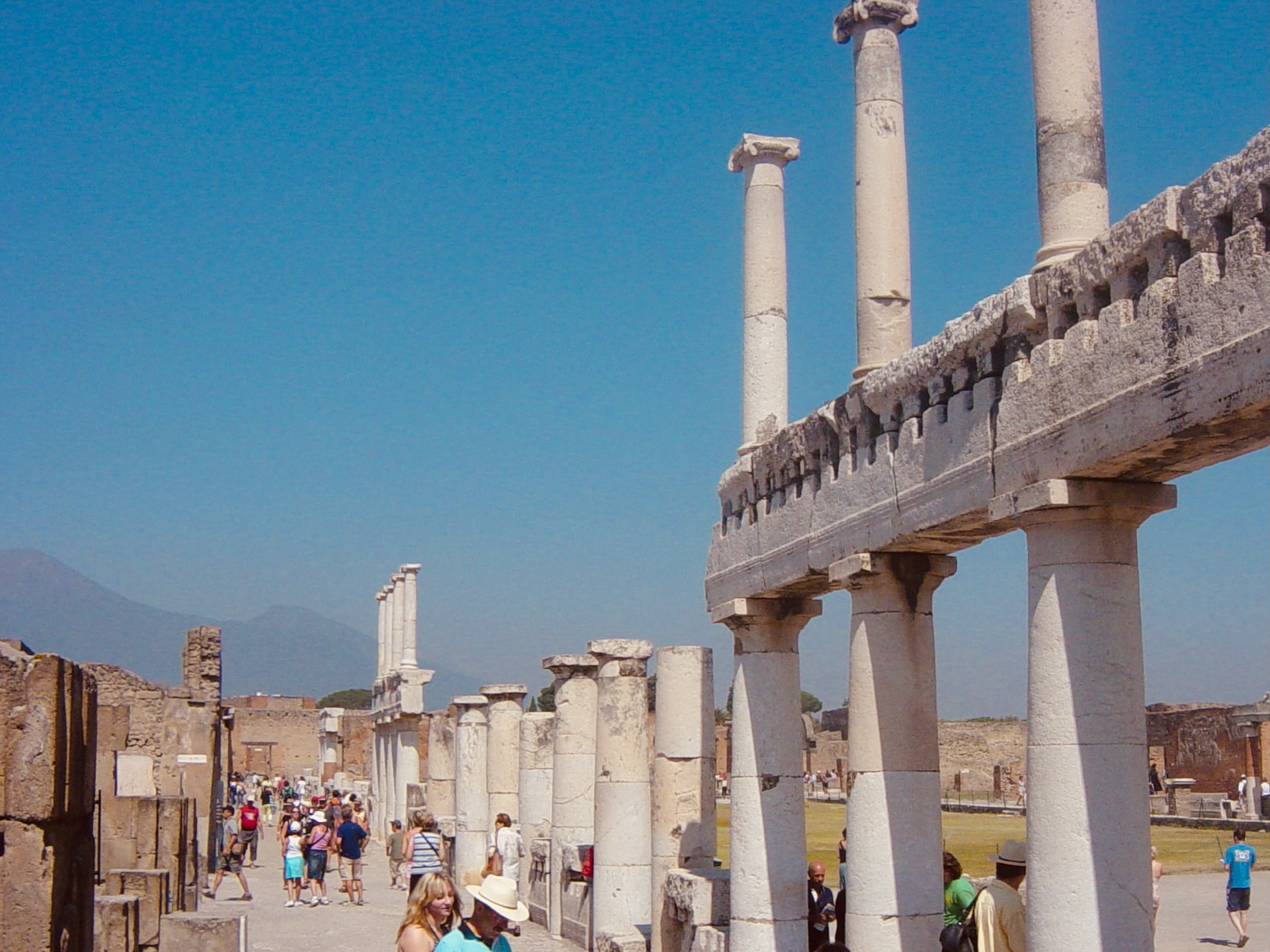
My visit to Pompeii took place back in 2006 during a family holiday to Europe.
We’d caught the train to Pompeii while our cruise ship was docked in Naples, finding ourselves wandering through the ancient site filled with relics that had been buried and forgotten for centuries.
It’s hard to imagine how different life was for our ancestors that lived nearly 2000 years ago, but the events that took place at Pompeii allow us to glimpse into that time period. This ancient Roman city, buried by the catastrophic eruption of Mount Vesuvius in 79 AD, is currently considered one of the world’s most captivating and significant archaeological sites.
As fascinating as it is to wander through this place frozen in time, the site is also a bit macabre. I found that witnessing the petrified human forms, fossilized by the sudden onslaught of volcanic ash, to be both unsettling and somewhat intriguing. Holding up our family’s digital camera (which captured a measly 3 megapixels per photo!), I captured the disturbing scenes as they appeared in front of me. It may have been my first ever interaction with dark tourism.
If you’re planning a trip around Italy and mapping out the best things to do in Italy along the way, a Pompeii day trip from Naples is an absolute must. Here’s how to go about visiting Pompeii from Naples and tips for making the most of your time at the historic site.
Quick summary:
Planning a Pompeii day trip from Naples? This guide covers everything you need to know — from how to get there by train, bus, or car, to ticket tips, guided tour options, and must-see highlights inside the ruins.
Recommended tours & tickets:
🎟️ Pompeii Entry Tickets – Book online in advance to skip the queues and head straight in.
🚆 Pompeii half day trip from Naples – The easiest option including transport from Naples.
👩🏫 Pompeii Tour with an Archaeologist – Gain expert insights with a guided tour that includes entry.
🌋 Mt Vesuvius Guided Hike – Add on a half-day trek up the volcano that buried the city.
How to get to Pompeii from Naples:

Pompeii guided tours
If you want the easiest option, consider hopping on a guided tour that includes transfers from Naples. This is an especially good option if you’re short on time, as you can access Pompeii without having to navigate public transport.
🚆 Booking a Pompeii half day trip from Naples will allow you to gain a deeper insight into Pompeii’s history and significance through a guided commentary as you explore the site.
Train to Pompeii
My family took a train to Pompeii while we were docked in Naples during our Celebrity Cruises tour of the Mediterranean. The Naples to Pompeii train is fairly straightforward. You start at Napoli Centrale Station and catch the Circumvesuviana train line. This local commuter train runs from Naples to various towns along the Bay of Naples, including Pompeii and Sorrento. Look for signs indicating the direction towards Sorrento – the platforms are located downstairs from the main hall of Napoli Centrale.
Tickets can be purchased at the ticket counters or self-service machines within the station. The machines should have English language options for non-Italian speakers. Tickets only cost a few Euros and are valid for the specific day of purchase, so you don’t need to worry about exact timings. Trains run frequently, approximately every 20-30 minutes, starting from early in the morning until late in the evening.
The station you’re heading to is called Pompei Scavi – Villa dei Misteri which is right next to the main entrance to the archaeological site. Make sure the train you board stops at this station, as some trains might be express services that skip certain stops. The train journey from Naples to Pompeii takes about 35-40 minutes.
Bus to Pompeii
Travelling by bus is the most budget-friendly way to get from Naples to Pompeii. Flixbus has a service that covers this route, and tickets generally cost only a few dollars.
🚌 Buses to Pompeii aren’t all that frequent, so search for Pompeii bus tickets online to find out whether this option is suitable for your travel dates.
Driving to Pompeii
If you prefer driving, renting a car is another option. The drive only takes about 30 minutes and there is parking available near the entrance of the site. However, you should only do this if you’re comfortable navigating Italian roads (which can be super narrow at times, and for some reason drivers in Italy don’t tend to follow the road rules as diligently as they do in other western countries).

How to buy Pompeii tickets:
The the archaeological site at Pompeii is open year-round from 9:00 AM to 7:00 PM, with last entry at 5:30 PM (hours may vary in the off-season). Arriving early in the morning is ideal to beat the crowds and the midday heat. Entry tickets allow you to explore the site in your own time inside of the Pompeii opening hours.
🎟️ You can buy your Pompeii tickets online in advance or at the entrance once you arrive onsite. Around 2.5 million tourists visit Pompeii each year so it might be worth booking in advance so that you won’t have to line up when you arrive.
Pompeii guided tour:
👩🏫 If you’re interested in getting a guided tour of the site (which I think would be highly beneficial as you’d get an in-depth commentary on what you’re looking at), consider booking a Pompeii tour with an Archaeologist which includes site entry tickets.

How long to spend at Pompeii:
Pompeii is very large, so it’s worth focusing on the highlights or a few key sites during your visit. Most tourists would plan to spend at least 3-4 hours exploring the archeological site during their Naples to Pompeii day trip itinerary, but if you’re really interested in Roman history, you could easily spend the entire day there.
What to see at Pompeii:
Some must-see Pompeii highlights include:
- The Forum: The political, religious, and commercial heart of Pompeii, where you can see the remains of temples, basilicas, and markets.
- The House of the Faun: One of Pompeii’s largest and most impressive houses, known for its beautiful mosaics, including the famous Alexander Mosaic.
- The Amphitheatre: The oldest surviving Roman amphitheater, built in 70 BC, which could hold up to 20,000 spectators.
- The Villa of the Mysteries: A well-preserved suburban villa with stunning frescoes depicting mysterious rituals.
- Plaster Casts: Throughout the site, you’ll see plaster casts of the victims of the eruption, captured in their final moments.

Other things to do around Pompeii:
Sorrento – The nearby town of Sorrento is a coastal destination perched on dramatic cliffs. It’s popular with tourists due to the breathtaking views of the Bay of Naples and the charming old town streets. Consider splitting a day trip between Pompeii and Sorrento to spend half a day exploring this picturesque town.
🌋 Mt Vesuvius – If you’re interested in seeing the nearby volcano which caused Pompeii to be buried in ash, then spend a few hours doing a Mt Vesuvius guided hike from Pompeii. This 3-hour tour takes you up to the top of the mountain (which is still considered an active volcano) to look into the caldera as well as see epic views of the Italian coastline.

Tips for visiting Pompeii:
- Food: Pompeii has a few convenient cafes and snack bars where you can grab a quick bite or drink, but these tend to be overpriced. For a more authentic experience, head to one of the nearby restaurants in the modern town of Pompei to sample traditional Italian dishes.
- Dress comfortably: Pompeii is an outdoor site with limited shade, so dress appropriately for the weather and wear sturdy shoes. You’ll be doing a lot of walking on uneven ground.
- Respect the site: Pompeii is a UNESCO World Heritage site. Be respectful of the ruins, don’t climb on the ancient walls, and please dispose of your trash properly.
Leave a Reply