
I had just one day to visit Rome (yes, only one!) which is, of course, not ideal.
It was during a cruise around the Mediterranean with my family when I was a fresh-faced teen, so we had no choice but to see Rome in a whirlwind day trip while our ship was docked nearby on the Italian coast.
This was back in 2006 when we had just come across the joys of owning a digital camera, hence the ancient pics that you’ll see in this post. We had a lot of fun capturing all the icons with the brick-shaped device that felt revolutionary at the time (but now seems kind of clunky and poor quality).
Anyway, Rome. This major tourist destination has a ton of awesome attractions all within its city center. If you’re staying in a central location near-ish to Piazza Navona, it would be entirely possible to walk to all the major sites from your accommodation.
It would be wise to spend at least a few days in the city to experience all the best things to do in Rome. If you’re short on time, you’ll need to plan an itinerary that hits all the top Rome attractions in an efficient manner. The good news is that I’ve already done this for you! This post will tell you exactly how to divide your time and in which order to visit Rome’s top attractions.
Quick summary:
In this post, I share my 2-day Rome itinerary covering all the must-see attractions — from the Vatican to the Colosseum — along with practical tips on how much time to spend at each site and the best tours and tickets to book in advance.
Recommended tours & tickets:
⛪ Vatican Museums & Sistine Chapel Ticket – Skip the line and explore masterpieces like the Sistine Chapel and St. Peter’s Basilica.
👣 Colosseum, Roman Forum & Palatine Hill Combo Tour – Cover three of Rome’s most iconic ancient sites in one guided visit.
🏛️ Pantheon Fast-Track Entry Ticket – Step inside one of the best-preserved ancient temples in the world with an audio guide.
🚶 Best of Rome Walking Tour – Stroll through the city with a guide, visiting Trevi Fountain, the Pantheon, Piazza Navona, and more.
Rome weekend itinerary:

Rome itinerary – Day 1:
- Morning – Vatican City
- Afternoon – Castel Sant’Angelo & St. Angelo Bridge
Rome itinerary – Day 2:
- Morning – Colosseum, Roman Forum & Palatine Hill
- Afternoon – Pantheon, Trevi Fountain, Spanish Steps
Rome’s top attractions:

Vatican City
Vatican City is the world’s smallest independent state. It’s located entirely within the city of Rome, and its religious significance, world-renowned art collections, and stunning architecture attracts millions of visitors each year.
Getting to Vatican City is easy, you just take Line A of the Rome Metro. Get off at either Ottaviano-San Pietro or Cipro stations, both of which are a short walk from Vatican City. The metro ride from central Rome (e.g., Termini Station) to Vatican City takes about 10-15 minutes.
How much time to spend at Vatican City:
Vatican City is huuuge, and it will probably be the site that takes up the most of your time. Even a quick visit will take 2-3 hours. You could see St. Peter’s Basilica, St. Peter’s Square, and if time permits, take a quick look at the Vatican Museums focusing on the Sistine Chapel.
⛪ Grab your Vatican Museums and Sistine Chapel entry ticket before you arrive so that you can skip the line at the entrance.
Most people would take a half day (4-6 hours) to visit Vatican City. Spending a little extra time here will allow you to climb the Basilica dome for a neat vista of Rome, as well as have a wander through the Vatican Museums.

Castel Sant’Angelo & St. Angelo Bridge
Originally built as a mausoleum for Emperor Hadrian, this fortress has served as a papal residence and prison. If you head inside, you’ll be able to explore the museum, climb to the terrace for views of the Tiber River and St. Peter’s Basilica, and learn about its varied history.
Directly in front of the castle is the St. Angelo Bridge (Ponte Sant’Angelo), which crosses the Tiber River as it winds through Rome. The bridge is known for its impressive collection of statues and a particularly lovely view of the Rome city skyline, including St. Peter’s Basilica in the distance. Walking along the riverbanks by the bridge, especially at sunset, is a popular activity for tourists.
How much time to spend at Castel Sant’Angelo:
If you want to see the main highlights, you can explore the castle’s exterior, walk through a few key rooms and visit the panoramic terrace for views of the city in about 1-1.5 hours. A more in depth visit will take about 2-3 hours including visits to papal apartments, the prison cells, and the armory.
At St. Angelo Bridge, you’ll probably only need 15-30 minutes to walk across the bridge, take in the views, and snap some photos of the statues and the surrounding landmarks. If you’re visiting at sunset, you may want to spend a little extra time here for photos.

The Colosseum
Along with the Leaning Tower of Pisa and Pompeii, Rome’s Colosseum is one of Italy’s most visited tourist attractions. This iconic symbol of ancient Rome is not only a marvel of engineering but also a window into the grandeur and somewhat gruesome nature of the Roman Empire.
The Colosseum has its own metro stop, Colosseo, on Line B (the blue line). It’s the quickest and easiest way to get there if you’re staying near a metro line.
How much time to spend at the Colosseum:
If you’re on a tight schedule, a quick visit of 1-1.5 hours is probably enough to walk through the main areas and take photos. Most people will spend a bit longer at the Colosseum, around 2-3 hours.
🛡️ For a more in-depth experience, consider booking a Colosseum, Roman Forum & Palatine Hill guided tour. This tour includes skip-the-line access and your guide will provide fascinating insights into the history and architecture of the Colosseum as you explore it.

Roman Forum and Palatine Hill
The Roman Forum was the center of ancient Rome’s political, social, and religious life. Visiting the Forum allows tourists to walk in the footsteps of Julius Caesar and Augustus.
Palatine Hill is one of Rome’s most ancient areas and is traditionally considered the birthplace of the city when Romulus founded Rome in 753 BC. The hill later became the site of imperial palaces.
How much time to spend at the Roman Forum and Palatine Hill:
1.5-2 hours can give you a brief overview of both the Roman Forum and Palatine Hill. Focus on key sites such as the Arch of Titus, the Temple of Saturn, and the remains of the imperial palaces on Palatine Hill. For a more in depth visit, plan to spend 3-4 hours exploring the sites.
👣 As the Colosseum is close by, it’s possible to combine a tour of the Roman Forum and Palatine Hill with the Colosseum. This will allow you to get an overview of all these sites in about 3 hours, and you have the added benefit of getting a guided commentary along the way.

The Pantheon
A remarkably well-preserved ancient Roman temple transformed into a church, the Pantheon is considered an architectural masterpiece. I remember being completely awed by the colours of the marble that decorated every surface of the interior, and amazed that us tourists were allowed to walk directly on the ancient stone floor. Surely we were not worthy of such a honour!
The Pantheon is centrally located in Rome, which makes it easy to combine with visits to nearby attractions like the Trevi Fountain, Piazza Navona, or the Spanish Steps.
How much time to spend at The Pantheon:
If you’re on a tight schedule, you can spend 20-30 minutes to admire the exterior, step inside to see the impressive dome and oculus, and take a few photos. For those with a bit more time, 45 minutes to an hour would be a decent amount of time to explore the Pantheon’s details, read about its history, and enjoy the serene atmosphere inside.
🏛️ As of 2023, entry to the Pantheon is no longer free and requires a ticket for an audio guide or tour. You can book your Pantheon Fast-Track Entry Ticket ahead of time to skip the line on arrival.

Trevi Fountain
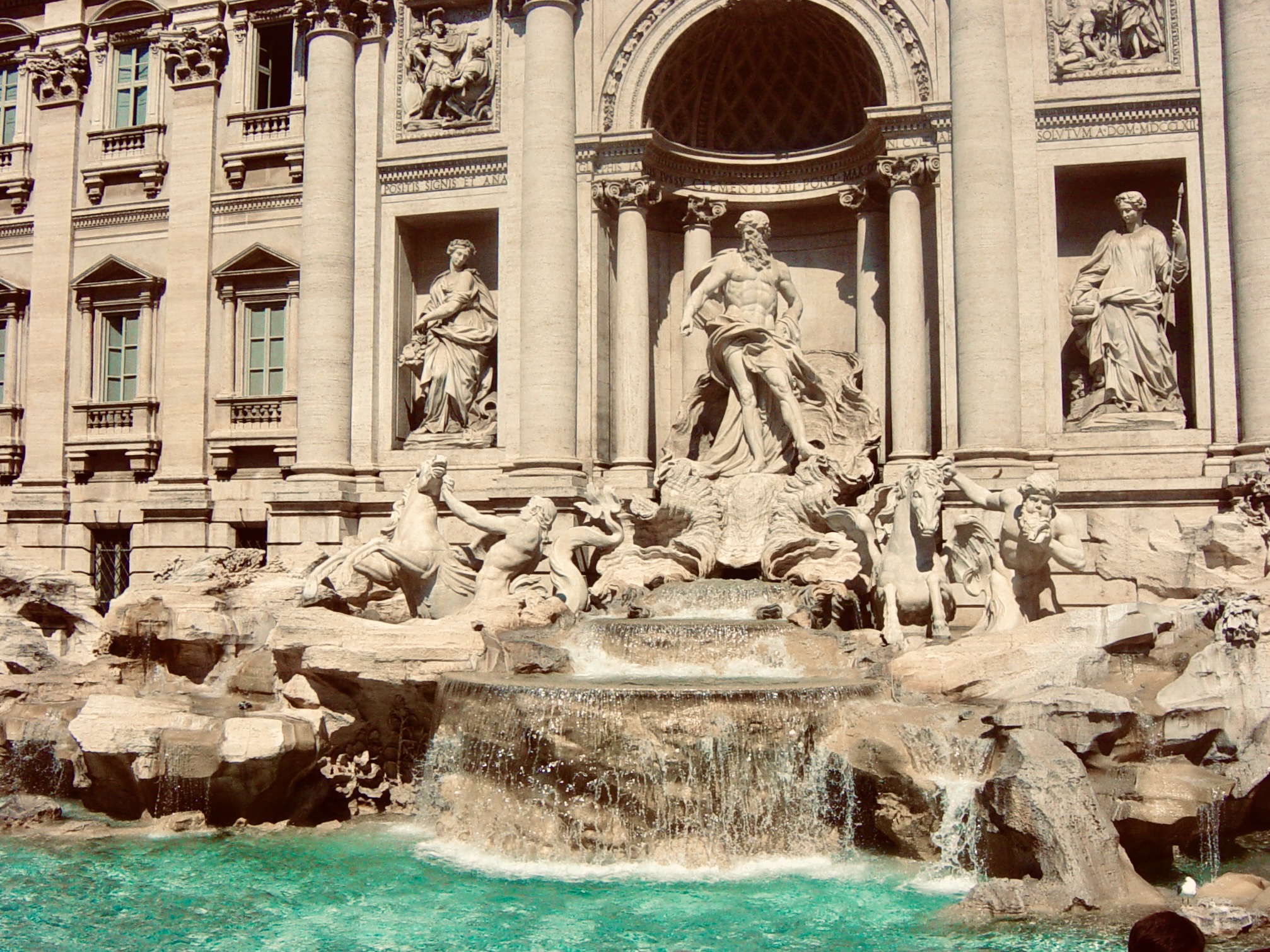
The most famous and largest Baroque fountain in Rome, Trevi Fountain is a stunning public work of art with intricate sculptures. Tourists often enjoy tossing a coin into the fountain to ensure a return visit to Rome. I tossed one in back in 2006 and am yet to return to the city, but hey, there’s still time!
How much time to spend at Trevi Fountain:
A visit to Trevi Fountain can be a quick stop. 15-20 minutes is usually enough. Keep in mind that the fountain can get very crowded during the day, especially in peak tourist season, so if you want a quieter experience it may be best to visit in the early morning or late evening.
🚶 If you’d like to know more about Trevi Fountain, a Best of Rome Walking Tour could be a good option – this will allow you to get a guided commentary of this site plus the Spanish Steps, Piazza Navona, and The Pantheon.

Spanish Steps
The Spanish Steps (Scalinata di Trinità dei Monti) is one of Rome’s most famous landmarks. Built in the 18th century, they connect Piazza di Spagna at the bottom with Trinità dei Monti church at the top. During certain times of the year, such as spring, the steps are adorned with flowers.
How much time to spend at the Spanish Steps:
15-20 minutes is enough to walk up the 135 steps from Piazza di Spagna to Trinità dei Monti, admire the Barcaccia Fountain at the base, and enjoy the view from the top. If it’s a sunny day, you may want some extra time to sit on the steps in the sunshine with a gelato watching the people pass by.
Leave a Reply