
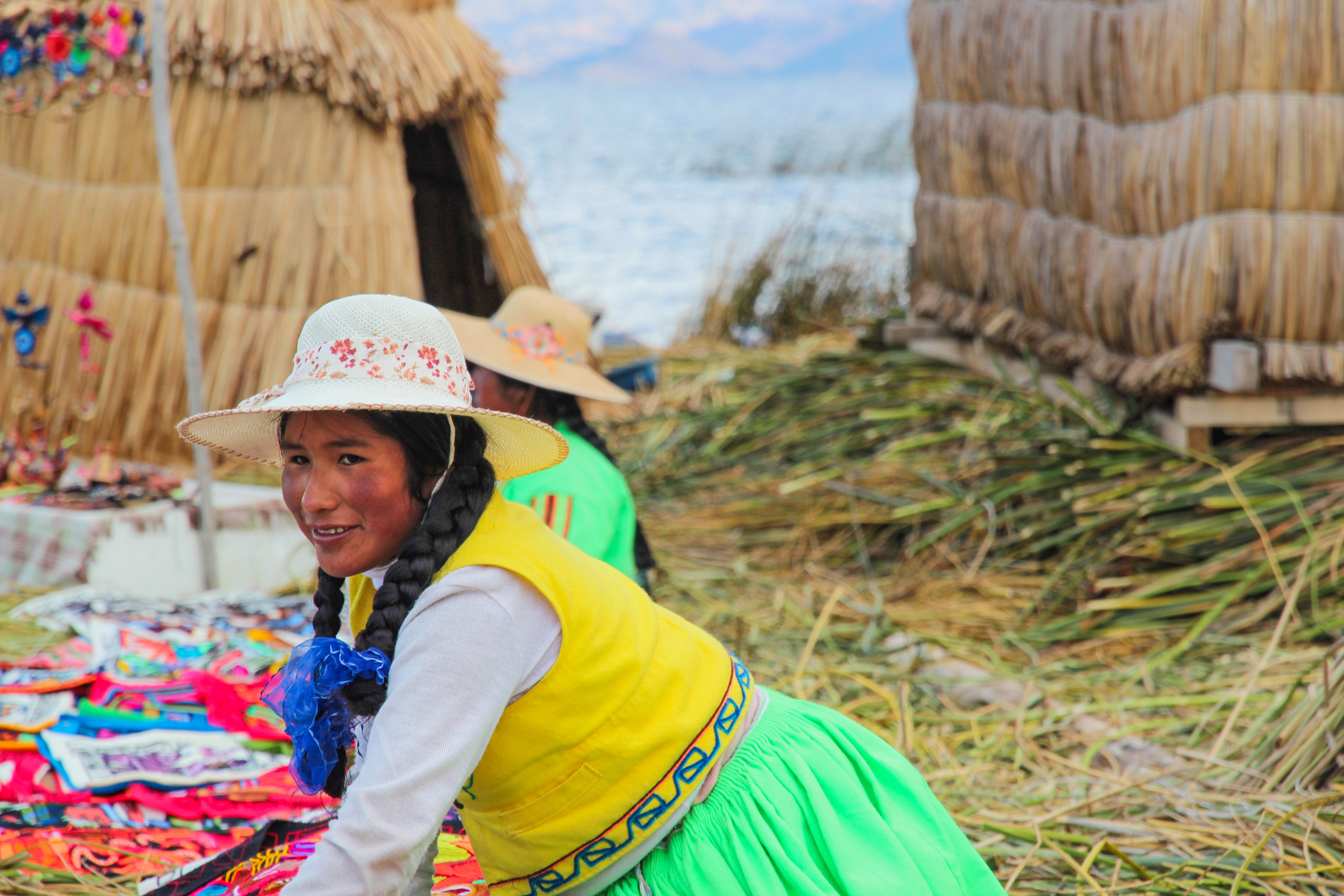
The Uros Islands on Lake Titicaca are different to your average travel destination… I can’t think of any other places I’ve previously visited that can actually move.
As we approached one of the floating islands made entirely from reeds pulled from the lake, I was immediately struck by the uniqueness of it all. Thinking about how ancient tribes found these creative ways to keep their families safe while existing in total harmony with nature, it felt like I was getting a rare insight into a culture that couldn’t be found anywhere else on Earth.
Stepping off our modern boat onto the floating island, made entirely from reeds pulled from the lake, it felt like I had arrived on a foreign planet. The ground, instead of hard rock, was supple and bouncy like a sponge. The Uros people welcomed us to their home with warm smiles, and proceeded to show us how they build and maintain their living, breathing, island home.
During a ride on one of their traditional reed canoes, an Uros man propelled our boat through the shallow waters using a long wooden pole, pushing us along much like a gondolier would in the canals of Venice. I spotted local fishermen drifting by in their boats gathering food for their community. They looked so peaceful in the afternoon sun. It seemed like a quiet and beautiful place to live.
As we glided across the glistening lake, I felt incredibly grateful for the opportunity to visit the Uros Islands in Peru during my travels through South America. If you’re heading to Puno and would like to know how to visit the floating Uros Islands, here’s all my recommendations for a magical day trip out on Lake Titicaca!
Quick summary:
The floating Uros Islands near Puno, Peru offer a one-of-a-kind cultural experience—walk on spongey reed islands, meet the Uros people, and glide across Lake Titicaca in a traditional canoe.
Recommended tours:
🚤 Half-Day Uros Islands Boat Tour – A short, scenic trip to experience the floating islands and meet the locals.
⛵ Full-Day Uros & Taquile Tour – Includes Uros plus a visit to Taquile Island, known for its stunning landscapes and UNESCO-listed textiles.
🚌 ‘Route of the Sun’ Scenic Bus Ride – Travel from Cusco to Puno by bus, stopping to explore ancient Inca ruins and scenic lookouts.

What are the Uros Islands?
The story of the Uros Islands is straight-up fascinating. The Uros people once built these floating islands as a way to escape conflict with the Incas and other mainland groups. Instead of running, they took to the lake. Their ancestors figured out how to weave layers of totora reeds into floating platforms, creating a home that could move if necessary.
The carefully maintained islands require constant upkeep so they don’t sink—current residents lay fresh reeds over the old ones to keep the islands afloat as the reeds on the bottom slowly decompose in the water.
The Uros people also offer a fascinating insight into traditional tribes of the area. Dressed in bright colours, their vibrant clothing paired with their warm hospitality makes visiting the floating Uros Islands a truly special destination to visit.

How to get to Puno
Puno is the main gateway to Lake Titicaca’s floating islands, including the unique Uros Islands. On our trip through Bolivia and Peru, we used buses to travel from Copacabana (Bolivia) to Puno, then from Puno onwards to Cusco.
🚌 If you’re coming from Cusco, you can hop on a scenic bus ride along the ‘Route of the Sun’. This is what we did when we travelled between Puno to Cusco.
Although it takes a whole day, it was a really interesting journey and we got to see so many cool things along the way (like ancient Inca ruins!).
Alternatively, you can take a short flight to Juliaca (the nearest airport). Once in Juliaca, it’s a quick 45-minute taxi or airport transfer to Puno on the shores of Lake Titicaca.
How to visit the Uros Islands from Puno: Floating islands on Lake Titicaca
Visiting the floating Uros Islands on Lake Titicaca is one of the best things to do in Puno, but it isn’t something you can do on your own. The islands are located several kilometers from shore, and the only way to reach them is by a guided boat tour from Puno.
A Puno to Uros Islands tour will provide transport to the islands as well as knowledgeable guides who can share insights into the history, culture, and daily life of the Uros people, making your visit much more meaningful.

Half-day boat tour to the floating Uros Islands on Lake Titicaca
🚤 The most popular option is a half-day Uros Islands boat tour. You can choose a morning or midday tour to make the most of the sunshine, or opt for a mid-afternoon departure to witness the sunset over Lake Titicaca.
Lake Titicaca boat tours will begin with a scenic ride. The boat type will vary depending on the tour company, but it is usually a covered boat equipped with comfortable seating, a restroom, and an upper deck that’s perfect for snapping photos.
Upon arrival at the first floating island, you’ll be greeted by local Uros families. You’ll have the chance to interact with the islanders, learn about the fascinating process of building and maintaining these reed islands, and observe their traditional way of life.
You can also take a short ride on a traditional reed boat for an extra charge (usually around 20 soles per person) which is an incredible way to experience the lake just as the Uros have for generations.
Some tours will also hop over to another floating island, where you can climb an observation tower for a panoramic view of the entire area.

Full-day Uros and Taquile Islands tour from Puno
⛵ If you have a full day, it’s worth considering a longer Uros Islands full-day tour that includes a visit to Taquile Island. This is the option that we chose when we visited Puno.
After departing in the morning and exploring the Uros Islands as you would on a half-day tour, your boat will then take you onwards to Taquile, a remote island in Lake Titicaca known for its spectacular views. Terraced hillsides climbing out of the deep blue waters which stretch endlessly towards the Bolivian mountains in the distance.
Taquile Island is home to a Quechua-speaking community famous for its handwoven textiles, recognized by UNESCO as some of the finest in the world. We had the opportunity to meet with some of these locals and see them knitting intricate patterns into woolen hats and garments. It was amazing to watch them practice their craft, which is not just a skill but a cultural tradition that has been passed down through generations.
Day tours to Uros and Taquile usually include a traditional lunch of freshly caught trout, quinoa soup, and locally grown potatoes.
While it was Uros that really left an impression on me, I do think that the extended day tour with a visit to Taquile is worth it, as it gives you the chance to really explore the Peruvian side of Lake Titicaca in detail.

Supporting the local community
Tourism plays a vital role in sustaining the Uros way of life, so consider purchasing handmade crafts directly from the families who live there.
Many of the people sell handmade trinkets or woven textile products, which are often just as colorful as their outfits. These souvenirs—miniature reed boats, intricate embroidery, and other handcrafted goods—represent the things that are important in their daily lives. Buying directly from them is not just a way to take home a meaningful keepsake, but also to support their community, as tourism plays a big role in their economy.

Travel tips for Lake Titicaca and visiting the Uros Islands in Peru
- Bring cash – Bring cash when visiting the Uros Islands in Peru—most floating islands on Lake Titicaca don’t accept card payments, so if you want to buy souvenirs or take a reed boat ride, make sure to have some soles on hand.
- Dress in layers – Puno and Lake Titicaca can be chilly, especially in the morning and evening. The sun is intense at high altitudes, so bring a hat, sunglasses, and sunscreen.
- Respect the locals – Engage with the community respectfully, ask before taking photos, and be mindful that this is their home, not just a tourist attraction.
- Stay hydrated – The high altitude can take a toll on your body. Drink plenty of water and take it easy if you’re not used to the elevation.
Leave a Reply