
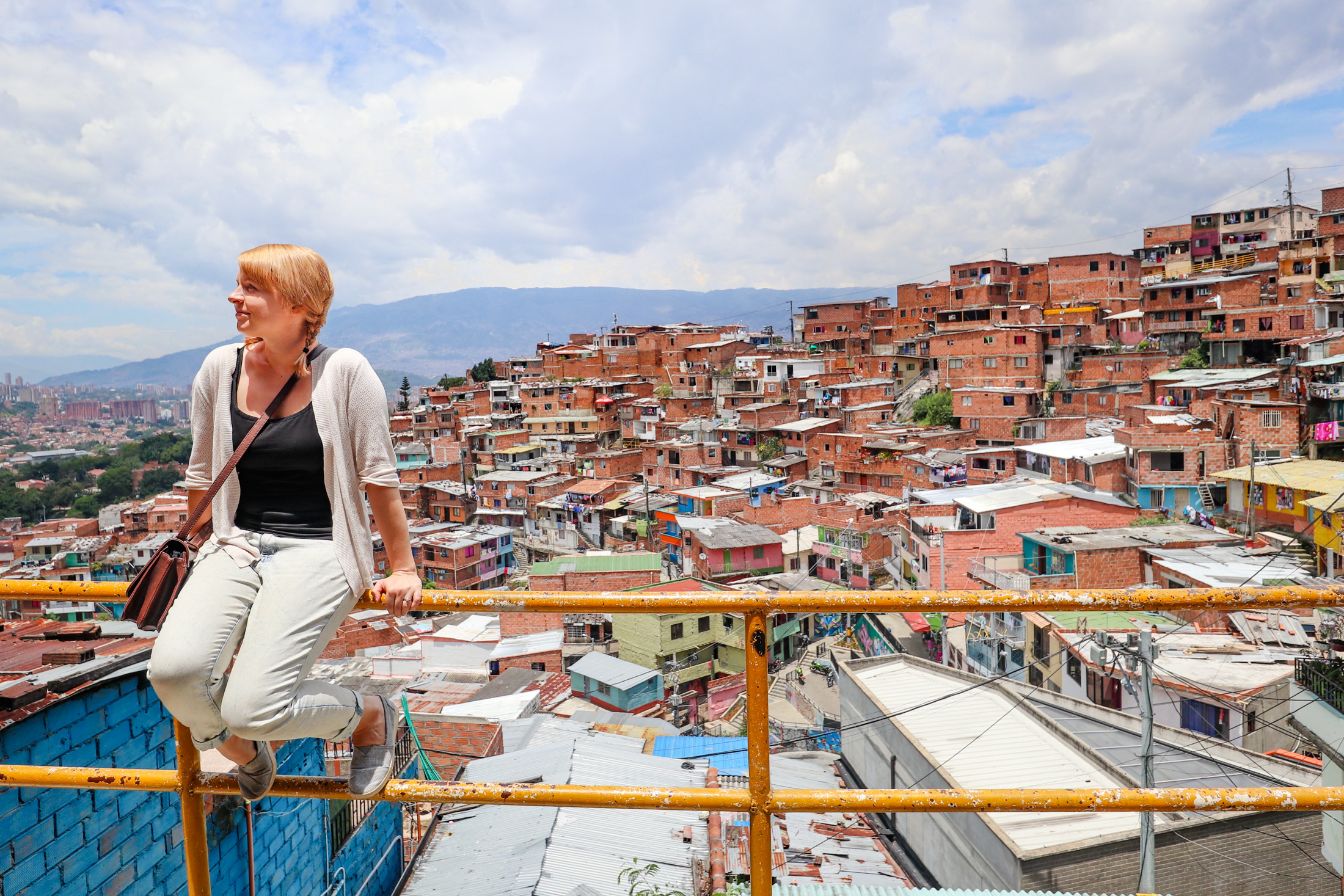
Just a few short years ago, both locals and tourists avoided Comuna 13 altogether.
I hesitate to bring up the TV series Narcos when talking about Colombia, as I know that locals aren’t too happy with the way it portrays the country, but the reality is that Narcos just re-told a story that was already well known. Medellin has somewhat of a dirty, violent, and corrupted history, and no one can deny that.
Once known as one of the most dangerous areas in Medellin, Comuna 13 was infamous for gang violence, police raids, and drug cartels. However, it’s not a destination that we now visit for narco tourism. Here, we have the opportunity to step into a place where the focus is on transformation, and the amazing ways this community has turned its story around.
Its turning point came in 2002, when Operation Orion (a controversial military intervention) led to both stabilization and displacement for many residents. In the years since, Comuna 13 became a symbol of Medellin’s renewal efforts. Investments in infrastructure, like outdoor escalators, and a thriving arts movement turned it into a much safer, more vibrant community and cultural destination.
When I visited Medellin as a tourist in 2017, I was very interested to see this transformation. I wanted to check out the powerful street art, with colorful murals depicting the history and spirit of hope, plus taste some authentic Colombian street food and experience the local lifestyle by venturing outside of the tourist areas within the city centre.
I thought there was no better way to be introduced to Medellin than by visiting Comuna 13. Here’s a rundown of my experience visiting the neighbourhood on a Medellin graffiti tour and the reasons why I think you should do one, too.
Quick summary:
In this post, I share my experience visiting Comuna 13 on a guided graffiti tour—what you’ll see, how to get there, what to eat, and why this tour is one of the best ways to understand Medellín’s social transformation.
Recommended tour:
🚡 Comuna 13 Graffiti Tour with Street Food — This top-rated experience is led by local guides who grew up in Comuna 13 and share personal stories behind the neighborhood’s art and transformation. You’ll explore the famous outdoor escalators and vibrant murals, plus try tasty Colombian street snacks.

How to visit Comuna 13 in Medellin:
Some of you might be wondering whether you can see Comuna 13 on your own. The answer is yes, of course you can, BUT I think a guided tour of Comuna 13 is 100% worth the cost. For one thing, you wouldn’t get the narrative of the area’s history if you went without a guide. And for another, some of the mural locations and little shops in the area aren’t really pinned on Google Maps, so knowing where to go once you’re there is not so easy.
It can be somewhat tricky to find Comuna 13 on your own, as the public transport option can be somewhat confusing, especially for people like me who speak very little Spanish. Even once you arrive at the base of Comuna 13, you might not know which way to walk to see the art. We actually met some other tourists in Medellin who had tried to find their own way to Comuna 13, but had failed to locate it.
To get there via public transport: If you’re familiar with Medellin or are a confident Spanish-speaker, you may feel comfortable venturing into Comuna 13 on your own. Take the metro to San Javier Station. From there, you can either walk or take a short taxi ride to reach the neighborhood’s central area.
Guided tours to Comuna 13: For first-time visitors to Medellin, joining a guided tour is a popular and secure way to explore. This is what I did when I visited Comuna 13, and I really thought it was absolutely worthwhile as local guides from the area share insights into the neighborhood’s history, culture, and murals. You can book through local operators such as a Comuna 13 tour with Medellin-Tours.com, or through an online booking agent.
🚡 I ended up going with a Comuna 13 Graffiti Tour, which I booked online through Viator before I arrived in Medellin. This tour included a ride on the cable car plus a walking tour of the neighbourhood and some street food snacks along the way.

Our tour started at the Poblado metro station. We met up with our guide, who was a Medellin local, then took the train to San Javier followed by a bus. I really enjoyed taking public transport, as it meant we got to experience the same journey that locals take to get in and out of the city.
Before we arrived at Comuna 13, our guide took us for a ride on a cable car to one of the outer suburbs. We received an explanation of why this mode of transport is so important to Medellin’s poorer residents who live on the hilltops and would struggle to commute to their workplaces without it.
Comuna 13 is actually made up of 12 neighborhoods. Most tours stick to areas like Las Independencias and 20 de Julio, which is where you’ll find the best street art. As Comuna 13 is perched on a steep hillside, it would be sensible for all visitors to wear comfortable shoes and be prepared for walking up some steep streets.
A set of staggered outdoor escalators takes people up the steep hillside, making it easier for residents and visitors to navigate the neighborhood. These escalators are a key attraction that symbolise the community’s transformation, and they also offer scenic views as you move up through the area.


The walls around the escalators have been artfully adorned, with every available public surface covered in layers of street art and graffiti. At the top of the escalators, a concrete walkway features some large-scale murals.
I really loved seeing the diversity in art styles and subjects, but the street art here isn’t just for show—it’s deeply meaningful, telling stories of resilience and peace. Keep an eye out for symbols like birds (peace), white cloths (a mother’s plea for ceasefire), and the vibrant colors of Colombia’s flag.


On our tour, we also had the opportunity to sample some Colombian street foods, including arepas or empanadas, crema/consuelo ice treats, and fresh fruit juice. You should find plenty of places to grab a snack, sip some coffee, or shop for unique souvenirs along the way.
Local breakdancers, musicians, and hip-hop artists often perform along the Medellin graffiti tour routes. You can stop to watch the performances, which bring the streets to life and reflect the area’s strong cultural identity.
And don’t forget to soak up the views! From the top of Comuna 13, you’ll get some of the best panoramas of Medellin’s colorful rooftops and the green mountains beyond.

At the end of the tour, we chose to make our way back to the station on our own. We felt comfortable walking along the main route through the neighbourhood without a local guide, though I wouldn’t recommend venturing too far from the main thoroughfare as it’s possible that you might stray into an area that isn’t considered as safe for tourists.
If you want a bit of background before you go, check out the Museo Casa de la Memoria—it’s a great way to understand Medellin’s history and how art has helped the city heal.
Honestly, I learned so much about the city of Medellin on this tour of Comuna 13, and I would recommend this tour to every single visitor to the city.
It was very eye-opening to hear stories of what this community had to endure, and inspiring to see how these things can change over time.
While the street art is a major draw, there’s so much more to uncover at Comuna 13—booking a tour with a local guide means that you’ll supporting a community that’s worked hard to rebuild and redefine itself. It’s about experiencing the community’s energy and the pride of its residents, and developing a deeper appreciation for the city’s journey.
Leave a Reply