
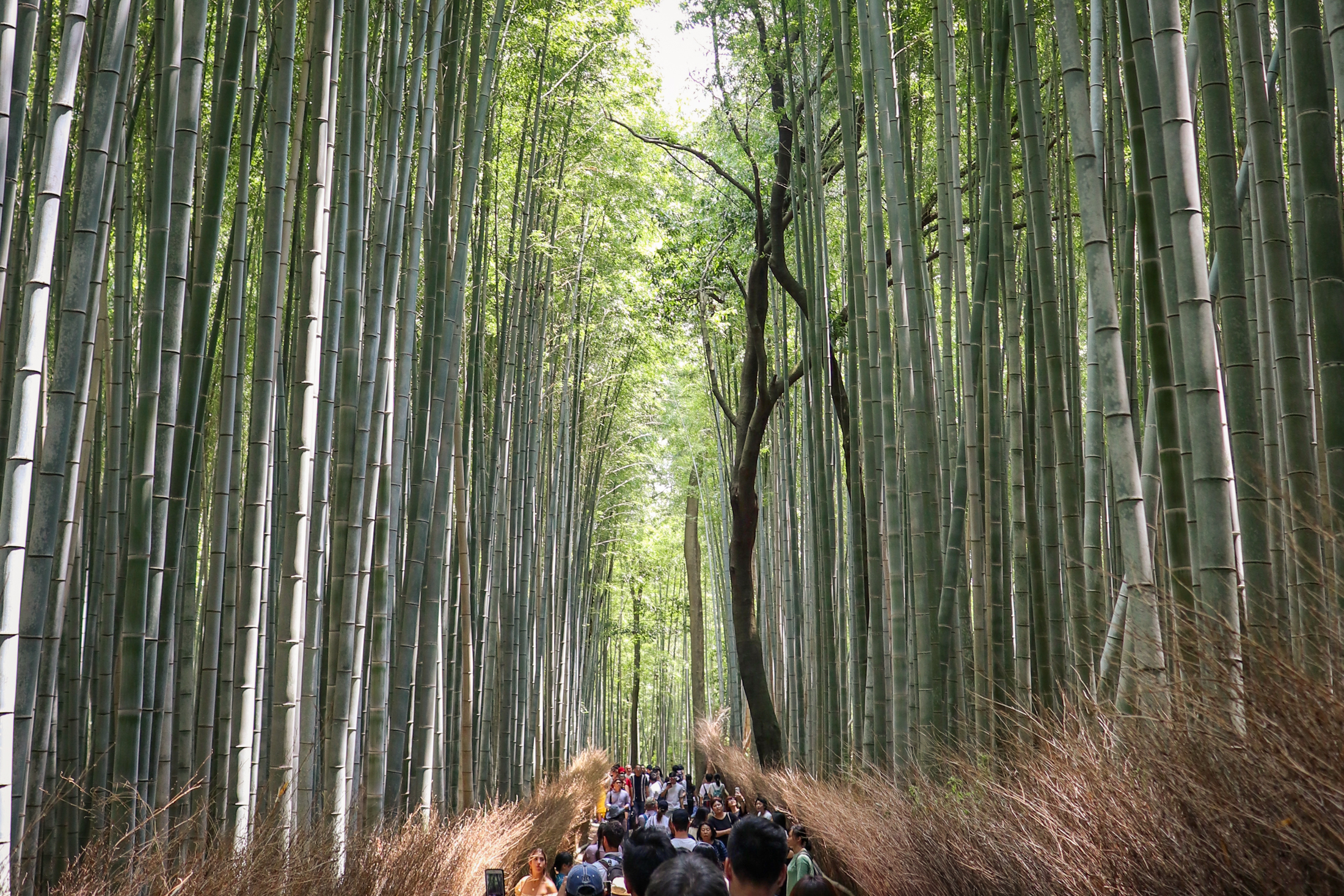
The Arashiyama bamboo forest is probably one of the most photographed spots in all of Japan.
With its towering green stalks and peaceful atmosphere (at least in theory), it’s no surprise that this scenic bamboo grove in Kyoto draws visitors from around the world.
But before you go expecting a tranquil moment alone with the bamboo, here’s the honest truth: it gets very crowded. My husband and I visited on a mid-morning trip to Arashiyama in 2019, and while the forest was beautiful, its popularity made it tough to enjoy the experience. It was hard to move through the crowd, let alone get any good photos.
Despite the hoards of people at the bamboo forest, we spent a half day wandering around Arashiyama and discovered some hidden gems that made it one of our favourite parts of Kyoto. There were some great attractions nearby that barely anyone knew about, and they really were a joy to explore.
Here’s everything you need to know to make the most of your own bamboo forest adventure in Arashiyama—plus a few creative ways to explore the area if you’re looking to go beyond the usual tourist trail.
Quick summary:
This guide covers everything you need to know about visiting the Arashiyama bamboo forest in Kyoto, including how to get there, what to expect from the crowds, and some other peaceful and scenic spots nearby.
Recommended tours:
👣 Arashiyama Secrets Walking Tour – A locally led walk through the forest and beyond
🚴 Early Bird Bamboo Forest Bike Tour – Beat the crowds and explore hidden gems on two wheels
📸 Photoshoot in the Bamboo Forest – Capture stunning memories with a professional photographer
🛺 Rickshaw Ride through Arashiyama – Relax and discover scenic spots with a traditional guide

How to get to Arashiyama from Kyoto
Arashiyama is a leafy district on the western edge of Kyoto, and it’s easy to reach by public transport.
We took the Randen Line train to Arashiyama Station, then walked to the bamboo forest entrance. It was a scenic 15 minute stroll from the station to the bamboo grove.
You can also catch the JR Sagano Line to Saga-Arashiyama Station, which is also about 15 minutes walk from the bamboo forest entrance. This is what you will want to do if you are travelling around Japan with a Japan Rail (JR) Pass.
👣 If you want to take your time to explore the side streets and hidden Arashiyama attractions along the way, it might be worth booking an Arashiyama secrets walking tour.
This tour would take the pressure off planning your own route from the station and help you discover temples, viewpoints, and stories you might otherwise miss.

When to visit the bamboo forest (and how to avoid the crowds)
Let me be real with you: if you want that dreamy bamboo shot with no one else in it, you’ll need to be there very early. We arrived mid-morning, and the forest was already packed with visitors. Every time I raised my camera, someone would inevitably wander into the frame. The grove itself is lovely, but the number of people definitely detracts from the atmosphere.
For a more peaceful experience, it’s worth setting your alarm and arriving right after sunrise. Alternatively, some small group tours start early enough to beat the crowds—and that can be a great way to discover quieter corners of Arashiyama, too.
🚴 Hop on an early bird bamboo forest bike tour to explore the area in the early morning. This looks like a fun and active way to see the forest before it gets too busy!
Want better photos? Hire a local to help!
📸 I found it really frustrating to get photos in the bamboo forest, so if capturing great photos is high on your list, it might be worth booking a bamboo forest photoshoot.
We saw at least one couple walking through the grove with a professional photographer, and honestly, it looked like a great way to not only get high-quality pics but also be guided through the most photogenic spots. It could be a great souvenir from your trip.

Kyoto Bamboo Forest map guide:
1 — Bamboo Forest
2 — Arashiyama Park Observation Deck
3 — Kameyama Park
4 — Tenru-Ji Temple
5 — Sogenchi Zen Garden
6 — Arashiyama Monkey Park
7 — Kimono Forest
Other things to do in Arashiyama (besides the bamboo)
We ended up spending a whole morning ticking off Arashiyama activities, and there’s definitely more than just the bamboo forest. The area has some gorgeous temples, parks and gardens. Here are my suggestions for what to see in Arashiyama:

Kameyama Park
We started our morning with a short hike through Kameyama Park, which turned out to be one of the most peaceful spots we visited in Arashiyama. The park sits just behind Tenryu-ji Temple and offers a quiet escape from the more tourist-heavy areas.
Walking paths wind gently up the hill through a forest, and at the top, we stumbled upon a scenic overlook (Arashiyama Park Observation Deck) which had sweeping views of the Katsura River winding between the hills.
This was definitely a hidden secret in Arashiyama—despite being so close to the bamboo grove, hardly anyone else was there. If you’re looking for a quiet moment away from the crowds, this short walk is definitely worth adding to your Arashiyama itinerary.

Tenryu-ji Temple and Sogenchi Zen Garden
Just nearby, we discovered what turned out to be one of the highlights of our visit: the Sogenchi Zen Garden, located inside Tenryu-ji Temple. This beautifully landscaped space has its own patch of bamboo trees—without the crowds. The entrance fee was 500 yen (though it’s probably more expensive now) and in my opinion, it was totally worth it.
While the main grove at the bamboo forest had been packed, here we were able to take our time, enjoy the scenery, and even get a few bamboo photos in peace. The garden itself is serene and artfully designed, with still ponds, raked gravel, and mossy paths that invite you to slow down. It wasn’t as dramatic, but it definitely had the peaceful vibe that I had imagined of the bamboo forest.
Arashiyama Monkey Park Iwatayama
Many visitors to the area make the short trek to Arashiyama Monkey Park Iwatayama. While we didn’t go ourselves, the monkeys are a popular attraction for travellers who want to see wild Japanese macaques in their natural habitat.
The park sits atop a forested hill on the other side of the Katsura River, and getting there involves a 20-minute uphill hike. At the top, you’ll be rewarded with panoramic views over Kyoto and the chance to observe monkeys roaming freely around the mountaintop. It’s a fun option for families or anyone looking to mix a bit of light adventure into their day.

Arashiyama town
Arashiyama’s town center is located around Arashiyama Station, where you’ll find the lively Arashiyama shopping street—a hub of souvenir shops, street food stalls, traditional sweets, and kimono rental stores. It’s a great place to wander between sights or stop for a snack.
We browsed a few shops and shared a strawberry shaved ice from one of the street vendors before venturing back to the station. It was warm and sunny on the day we visited Arashiyama, so the cool, sweet treat was exactly what we needed.
🛺 One option for exploring Arashiyama town is a Arashiyama rickshaw ride. We saw quite a few clattering through the lanes—it looked like a fun way to explore, especially for anyone who prefers not to walk too far!
One spot in town that we didn’t get to, but I’ve heard is worth a quick look, is the Kimono Forest near Arashiyama Station. Despite the name, it’s not actually a forest—it’s an art installation made up of hundreds of glowing pillars wrapped in colourful kimono fabrics. Apparently they are especially striking in the evening when the pillars are lit up.

Vegetarian eats in Arashiyama
Thanks to the Buddhist communities in the area, Arashiyama has a handful of vegetarian restaurants—though be warned, many of them still use fish stock in their soups and broths. We stopped by one tofu place that looked promising, only to find out that almost everything included dashi.
In the end, we chose to eat at Shigetsu, a well-known vegetarian restaurant inside the Sogenchi Zen Garden grounds. It serves Shojin Ryori, a traditional Japanese Buddhist cuisine that’s completely plant-based. I was a little hesitant at first because the cost (3,300 yen per person for the set buffet when I visited in 2019), but the experience ended up being one of my favourites in Kyoto. Sitting cross-legged on tatami mats and practicing mindful eating in such a peaceful setting made the meal feel like a meditation. If you’re vegetarian or just want to try something different, I highly recommend it.

My final verdict on visiting the bamboo forest in Kyoto
Look, the bamboo forest is touristy—but if that’s the one thing that brings you to Arashiyama, then I’m happy that you’re doing it. If you can, plan your visit to the bamboo forest for very early in the day, then venture out from the famous Kyoto bamboo grove and dive into a few of the temples, gardens and parks.
Arashiyama has so much more to offer than just a quick photo op. Spend a half day (or a whole day) exploring at a relaxed pace, and I swear you won’t regret it. You’ll find that Arashiyama really is a lovely destination.
Leave a Reply