
This post was originally published on A Globe Well Travelled in 2022. The content has been revised and updated with fresh information.
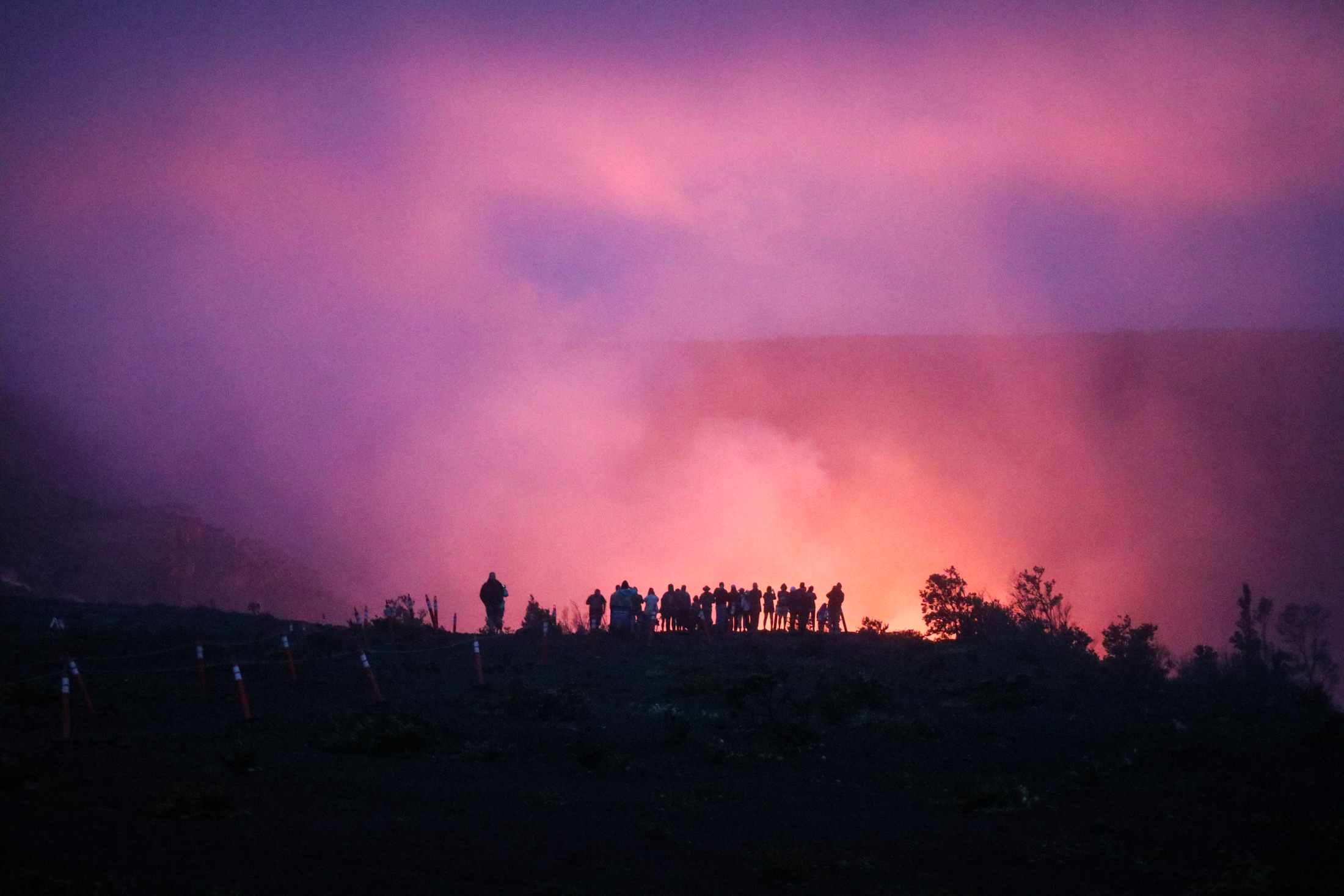
There’s something pretty surreal about standing on the edge of an active volcano and watching molten lava bubble away in the crater below.
My husband and I were lucky enough to see exactly that when we visited Hawaii Volcanoes National Park, and it’s something I’ll never forget. It was truly a Hawaii bucket list experience.
We spent two nights in the nearby town of Volcano, which gave us a full day to explore the park and the chance to head back after dark to see the lava. There’s so much more to this place than just the active volcano, though. We hiked across an old lava lake, wandered through an underground lava tube, and drove through enormous fields of black volcanic rock that looked like something from another planet.
My parents actually visited the park last year on my recommendation, and although they weren’t quite as lucky with the eruption timing (they managed to arrive between two particularly impressive episodes of lava activity!), they still really enjoyed exploring it. I think that says a lot about how worthwhile this national park is, even when Kīlauea isn’t putting on a show.
If you’re planning a visit, I’ve put together this one-day Hawaii Volcanoes National Park itinerary based on our favourite experiences. I’ll also share a few tips on where to stay, how to get around, and how to find out whether there’s any lava to see during your visit.
Quick summary:
Hawaii Volcanoes National Park is one of the highlights of the Big Island, with enormous volcanic craters, steaming vents, lava tubes and some incredible hiking trails. This one-day itinerary covers my favourite things to see and do, plus tips for planning your visit and potentially seeing lava after dark.
Recommended tours:
🌋 Hilo to Hawaii Volcanoes National Park Day Tour – Explore the park’s volcanic landscapes on a guided day trip from Hilo.
🚐 Kona to Hawaii Volcanoes National Park Day Tour – Visit the park’s highlights on a guided excursion from Kona.
Where to stay:
🛏️ Kilauea Lodge and Restaurant – Cosy rainforest lodge in Volcano town, just minutes from the national park entrance.

How to get to Hawaii Volcanoes National Park
Hawaii Volcanoes National Park is on the southeastern side of the Big Island, and the easiest way to get there is by driving. It’s about a 45-minute trip from Hilo or around 2–2.5 hours from Kona, depending on where you’re staying.
When we visited, we hired a car in Kona and made the national park part of our Big Island road trip. We drove from Kona to Volcano, spent two nights there, then continued on to Hilo. It worked really well, as we didn’t have to worry about a long drive after spending the day exploring the park.
My parents did things a little differently when they visited last year. They stayed in Hilo and drove out to the park on a couple of separate day trips, which is another good option if you’d rather base yourself in a larger town. Hilo is close enough that you can easily visit the park and return to your accommodation afterwards.
Visiting Hawaii Volcanoes National Park on a guided tour
A guided day tour from either Hilo or Kona is a great alternative if you don’t want to drive, especially as the park is quite spread out and there’s a fair bit of distance between some of the attractions.
From Hilo
🌋 If you’re staying in Hilo, I’d suggest booking a Hilo to Hawaii Volcanoes National Park day tour. It’s a relatively short journey to the park, so you’ll have more time for sightseeing.
From Kona
🚐 For visitors based on the western side of the island, a Kona to Hawaii Volcanoes National Park day tour is a convenient option. It’s a longer day out, but you won’t have to worry about navigating the island or making the return drive yourself.
One day in Hawaii Volcanoes National Park: The itinerary
There’s a surprising amount to see in Hawaii Volcanoes National Park, but I think one full day is enough to cover the main highlights. You’ll need a rental car to follow this itinerary independently, as some of the attractions are quite spread out.
I’d suggest getting an early start, especially if you’re planning to hike the Kīlauea Iki Trail and drive all the way down Chain of Craters Road. This is roughly the route we followed during our visit, although we had the luxury of spreading some of our exploring across our two-night stay in Volcano.
I’ve included all my favourite stops below, along with a few suggestions for what to prioritise if you’re short on time. And if Kīlauea happens to be erupting during your visit, you might want to save some energy for a return trip after dark!

Hawaii Volcanoes National Park itinerary
V – Volcano town centre
E – National Park entrance
1 – Kīlauea Overlook & Kau Desert Trail
2 – Steam Vents & Steaming Bluff Trail
3 – Sulphur Banks Trail
4 – Kīlauea Iki Overlook & Trail
5 – Nāhuku Lava Tube
6 – Devastation Trail & Old Crater Rim Drive
7 – Keanakako’i Overlook
8 – Chain of Craters Road

See the Hale Ma’uma’u Crater at Kīlauea Overlook
I’d start your day with a visit to the enormous Halemaʻumaʻu Crater, which is part of the Kīlauea volcano. It’s one of the most impressive sights in the national park, and getting a good look at the crater really gives you a sense of just how enormous this volcano is.
When we visited, we parked at Kīlauea Overlook and walked about 5-10 minutes further along the Kaʻū Desert Trail to another viewpoint on the crater rim. The views were spectacular. During the day, we could see volcanic gases rising from the crater, although the molten lava wasn’t particularly easy to make out in the daylight. We returned after sunset on another evening, when the glow from the lava was much more visible against the dark sky.
Even if Kīlauea isn’t erupting when you visit, I’d still recommend stopping at the crater viewpoints. The scale of the landscape is incredible, and it’s fascinating to see how much the volcano has changed through its various eruptions.
Just keep in mind that the best viewpoints can change depending on volcanic activity and park closures, so it’s worth checking the National Park Service website before you visit. And if the weather is looking a bit foggy, you might want to come back later in the day when the views are clearer.


Explore the Steam Vents and Sulphur Banks
Just down the road from Kīlauea Overlook are a couple of short walking trails where you can get a closer look at some of the volcanic activity happening beneath your feet.
I’d start with the Steam Vents and Steaming Bluff, where hot steam rises out of cracks in the ground. The steam is created when groundwater seeps down into the hot volcanic rocks beneath the surface, heats up, and escapes back into the air. It’s pretty neat to stand beside the vents and feel the warm mist rising out of the ground!
Nearby, the Sulphur Banks Trail (also known as Haʻakulamanu) takes you along a boardwalk past rocks stained yellow and orange by volcanic gases and minerals. The colours are really unusual, and there’s that unmistakable sulphur smell hanging around in the air.
Both of these walks are short and easy. I’d allow around 30–60 minutes to explore both areas, depending on how often you stop for photos.
One important thing to remember is to stick to the marked paths and boardwalks. The ground around volcanic vents can be unstable, and the gases can be hazardous, so this definitely isn’t somewhere to wander off-trail for a better photo!
Note: As of 2026, the Sulphur Banks Bridge is currently closed due to damage, but the boardwalk and Sulphur Banks Trail remain open. You can still access the area from the western entrance near Steam Vents. Check the NPS website for any updates before visiting.


See Kīlauea Iki Crater
Next up is Kīlauea Iki Crater, which is one of my favourite places in Hawaii Volcanoes National Park. The crater was filled with molten lava during an eruption in 1959, but today it’s a vast landscape of solidified volcanic rock surrounded by lush rainforest.
If you’re following this one-day itinerary, I’d suggest stopping at Kīlauea Iki Overlook, where you can get a fantastic view across the crater without having to do a lengthy hike. You can also walk a short section of the Kīlauea Iki Trail along the crater rim if you’d like to stretch your legs and experience a little more of the scenery.
If you’ve got more time to spend in the national park, though, I’d highly recommend doing the full Kīlauea Iki Trail. This was honestly one of the most awesome hikes we’ve ever done!
The trail takes you right across the floor of the crater. It’s such an unusual experience to walk across the black rock, with enormous cracks and ripples in the stone all around you. The whole landscape looks like something from a sci-fi movie, and it’s even more impressive when you’re standing in the middle of it.
The full loop is approximately 5.3 km (3.3 miles) and takes around 2–3 hours to complete. There’s a decent amount of elevation change as you descend into the crater and climb back up again, so it’s a bit more challenging than the distance might suggest. You’ll also want proper walking shoes, as the crater floor is rocky and uneven, and the rainforest sections can be muddy after rain.
I’m really glad we made time for this hike, and I’d definitely recommend it if you’re spending a couple of days exploring the park.

Walk through Nāhuku (Thurston Lava Tube)
Just down the road from Kīlauea Iki Overlook is Nāhuku (Thurston Lava Tube), which is another really cool place to explore. This enormous underground tunnel was formed hundreds of years ago when molten lava flowed through the area, leaving behind a hollow passage as the lava drained away.
Today, you can actually walk right through the tunnel. The walk takes you through a lush rainforest before descending into the lava tube, which is illuminated during the day. It’s a relatively short and easy walk, so I’d definitely recommend including it in your one-day itinerary. Allow around 30 minutes to explore.
One thing I remember from our visit is how damp it was inside the tunnel. There were puddles of water on the ground, so I’d suggest wearing shoes that you don’t mind getting a little wet. The rocky surfaces can also be slippery, so watch your step!
Parking at Nāhuku can be limited, particularly during busy periods. If you can’t find a space, you may be able to park at Kīlauea Iki Overlook and walk to the lava tube via the connecting trail, although this will add some extra walking time to your visit.
Check out Devastation Trail or Keanakākoʻi Overlook
If you’ve got time for another short walk, Devastation Trail is worth considering. This easy trail passes through an area buried by volcanic cinders during the 1959 eruption of Kīlauea Iki, where you can see how the landscape has gradually recovered. We skipped this trail as we’d already done a fairly substantial hike, but it’s a good option if you haven’t done any other hikes yet.
Alternatively, you can walk along the Old Crater Rim Drive towards Keanakākoʻi Overlook for views across the Kīlauea caldera. We actually did this walk before sunrise to see the erupting volcano, which I’ll tell you more about in the lava-viewing section below.
Both walks are optional, so don’t worry about skipping them if you’d rather spend more time exploring Chain of Craters Road.


Drive down Chain of Craters Road
I’d definitely recommend making time to drive down Chain of Craters Road, which takes you from the upper slopes of Kīlauea all the way down to the coast. It’s one of the most scenic drives in Hawaii Volcanoes National Park, and the landscapes along the way are pretty incredible!
The drive takes around 45 minutes each way without stops, although I’d allow at least 2 hours for the return trip so you can pull over at a few viewpoints. As the name suggests, the road passes several volcanic craters, although I actually found these a little underwhelming after seeing the enormous Kīlauea caldera earlier in the day.
For me, the most spectacular part was the second half of the drive, where the road winds through vast fields of solidified lava that flowed down the mountainside towards the ocean during various eruption episodes. There are some fantastic viewpoints along the way where you can see the old lava flows stretching all the way to the coastline.
At the end of the road, you can walk towards the coast to see the dramatic lava cliffs and Hōlei Sea Arch, which has been carved out by the waves. There’s also the Puʻuloa Petroglyphs Trail, where you can see ancient Hawaiian carvings etched into the lava rock. We skipped this one as we’d already done plenty of hiking, but it could be worth adding if you’ve got some extra time and energy.


How to see lava at Hawaii Volcanoes National Park
One of the most exciting things about visiting Hawaii Volcanoes National Park is the possibility of seeing molten lava, but whether you’ll actually get to see an eruption is entirely down to luck!
We were lucky enough to be visiting during an eruption phase, and we saw the lava glow from the main crater viewpoints after sunset. But our most memorable experience was getting up at 4:40am to see the volcano in action before sunrise.
We parked at the Devastation Trail parking area and walked for about 20 minutes along Old Crater Rim Drive to a temporary lava-viewing area near Keanakākoʻi Overlook. Walking through the pitch black darkness with only our smartphone torches was quite an experience, but it was absolutely worth it! We got to see molten lava bubbling away in the crater, and I managed to get some great photos with my telephoto zoom lens.
There were already around 30–40 people at the viewpoint before sunrise, but we still had a good view. If you’re planning to see lava yourself, I’d recommend bringing a torch, warm clothing and a zoom lens or binoculars.
My parents weren’t quite as lucky when they visited last year. They arrived between two spectacular eruption episodes, so unfortunately missed out on seeing the impressive lava fountains. They still loved exploring the park, though, and mentioned that during major eruptions, traffic can back up at the entrance as everyone rushes in to see the action.
If you’re hoping to see lava, check the National Park Service website before your visit. Eruption activity and viewing locations can change quickly, and there’s no guarantee that lava will be visible. If an eruption is happening, I’d suggest allowing some flexibility to visit after dark, when the glow can be easier to see.

Where to stay near Hawaii Volcanoes National Park
If you’re planning to spend a full day exploring Hawaii Volcanoes National Park, I’d really recommend staying nearby for a night or two rather than driving all the way back to Kona afterwards.
We spent two nights in the little town of Volcano (best town name ever!), which is just a five-minute drive from the national park entrance. We rented a private cabin through Vrbo which was surrounded by dense trees, and I absolutely loved how peaceful and secluded it felt. It was also incredibly convenient for heading back into the park after dark to see the lava.
🛏️ If you’re looking for somewhere to stay, I’d suggest Kilauea Lodge and Restaurant, a cosy rainforest lodge with comfortable rooms and an on-site restaurant. It’s just a few minutes from the park entrance, making it a great base for exploring.
Alternatively, you could base yourself in Hilo, which is around 45 minutes away. My parents stayed there when they visited and made a couple of day trips into the park, which worked well for them. Hilo has a much bigger selection of accommodation and restaurants, so it’s a good option if you’d prefer to stay somewhere with more amenities.

FAQs about visiting Hawaii Volcanoes National Park:
How much does it cost to visit Hawaii Volcanoes National Park?
The standard entrance fee is $30 USD (as of 2026) per private vehicle, which covers admission for seven consecutive days. If you’re planning to visit other national parks during your trip, it might be worth looking into an America the Beautiful pass.
Is Hawaii Volcanoes National Park open 24 hours?
Yes! Hawaii Volcanoes National Park is generally open 24 hours a day, including overnight for lava viewing. Some facilities and roads have different operating hours, though, so check the NPS website for any temporary closures.
What should I bring to Hawaii Volcanoes National Park?
I’d recommend bringing comfortable walking shoes, a rain jacket, sunscreen, a hat, plenty of water and some food/snacks. The weather can change surprisingly quickly at the crater rim, and it’s much cooler up on the mountain than it is down by the coast.
Can you buy food inside Hawaii Volcanoes National Park?
Food options inside the park are limited, so I’d suggest bringing a picnic lunch or picking up snacks before you arrive. Volcano House also has dining options inside the park. We stopped at Kīlauea General Store in Volcano to source snacks for our day out in the national park.
Can you visit Hawaii Volcanoes National Park without a car?
Absolutely! If you’re not planning to rent a car, you can join a guided day tour. I’d recommend a Hilo to Hawaii Volcanoes National Park day tour if you’re staying on the eastern side of the island, or a Kona to Hawaii Volcanoes National Park day tour if you’re based on the west coast. Both are convenient ways to explore the park without having to worry about driving yourself.
Leave a Reply